Home and belonging
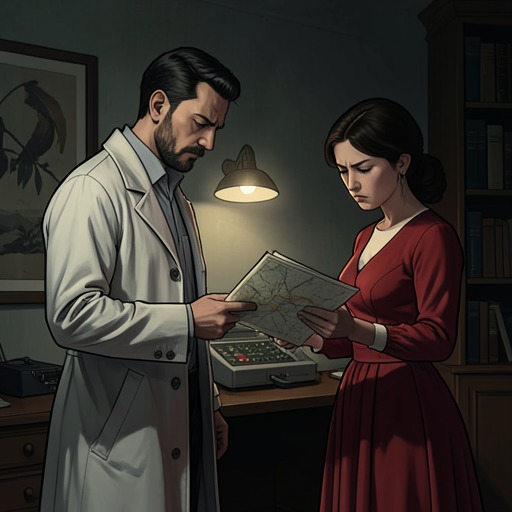
The HumansHome and belonging name the narrator’s decisive change in what he wants from existence. After wondering why he feels a need to belong and what function he has in the universe, he comes to recognize that neither abstract purpose nor distant perfection can answer that need. He wants to care for others and be cared for, to have a family, and to live happily in the present; because that home is only a short walk away, he stands up and goes toward it.
A Need That Defies Explanation
The idea first appears as a lack the narrator cannot account for. After a conversation ends, the man he has been speaking with leaves, wincing from the pain of his damaged leg; the narrator remains on a bench as the rain stops and the raindrops slowly evaporate. He knows he should return to Corpus Christi College, but does not feel moved to leave. In that stillness, the question of belonging arrives not as a conclusion he has reasoned out but as an unsettling feeling within him. The change in the weather marks the pause, while the narrator’s immobility gives the question room to take shape.
He asks what he is doing there and what his function in the universe is. The scale of that second question makes belonging seem, at first, like a problem of cosmic purpose. But the passage does not resolve it through a theory or a newly discovered function. Instead, the narrator considers the question repeatedly, then feels something sliding into focus. His understanding begins with an experience of need, not a proof that need is rational or useful. The concept’s force lies in this reversal: the feeling he cannot explain becomes more decisive than the abstract explanations he might have expected to trust.
From Cosmic Distance to Human Company
Later, the narrator looks at the night sky and recognizes that he does not want the peace, calm, and logic he associates with more enlightened planets. Their apparent perfection offers a contrast to the life he is beginning to choose, but it does not satisfy him. What he wants is described instead through reciprocal relationships: people he could care for, and who would care for him. The two directions matter equally. Belonging is not simply being near others or claiming a place among them; it involves mutual care.
The narrator gives that desire an immediate, human scale by naming family and happiness. He wants happiness neither tomorrow nor yesterday, but now. This makes belonging inseparable from the present: it is not a promise of a perfect future or a way to undo the past, but a wish to share ordinary life with people who matter to him. The passage sets that wish against the distant stars, turning the vastness above him into a backdrop for a more intimate decision. He does not want the remote ideal of a flawless civilization; he wants a life of attachment here.
Gulliver’s Words and the Possibility of Return
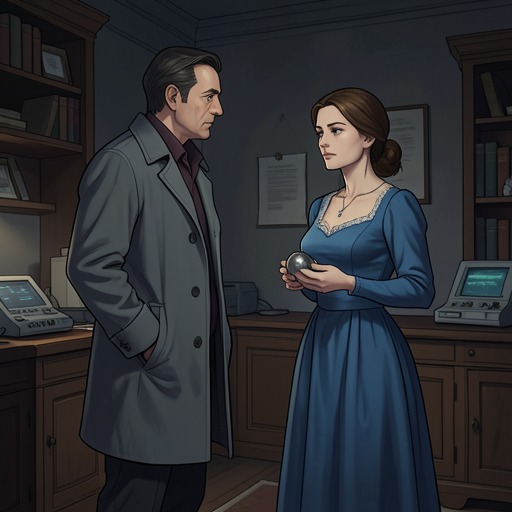
The narrator’s exchange with Gulliver makes the prospect of home relational rather than merely geographical. Gulliver says he thinks Isobel Martin wants the narrator to come back, though she has not said so directly. The narrator hesitates. He worries that Gulliver may have misunderstood his mother and that returning could bring difficulties; he also wonders what Isobel would call him, since he has no name and believes it would be wrong for her to call him Andrew. The possibility of belonging is therefore not presented as simple reconciliation. It carries uncertainty about identity, what the family can understand, and whether the narrator can occupy the place he once seemed to hold.
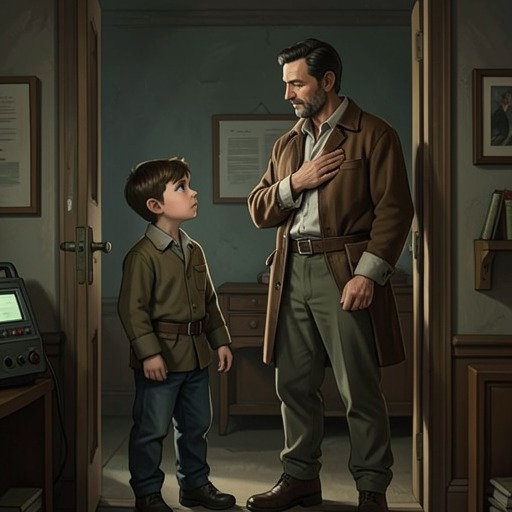
When the narrator asks whether Gulliver himself misses him, Gulliver says that he does. The narrator answers that he misses them both. He recognizes sentimentality as a human flaw and a distortion, yet also acknowledges the force behind it as authentic. That tension matters: the narrator does not have to dismiss his feelings as rationally justified before they can guide him. Gulliver’s words do not remove the uncertainties around Isobel’s response, but they establish that a bond remains between the narrator and the boy. The wish to return grows from that expressed attachment, not from certainty that everything will be easy.
Choosing Home
The narrator eventually states what his earlier questions have been moving toward: he wants to go home. The decision follows his recognition that he wants a family, care in both directions, and happiness in the present. Home is not defined by a grand destination or by the restoration of an uncontested identity. The narrator has just questioned whether he can be called Andrew, and the evidence does not settle how Isobel will name or receive him. What it does establish is his own desire to return to the people he misses.
The practical detail that home is only a short walk away gives the choice its quiet decisiveness. After sitting through the evening and looking up at distant suns and planets, the narrator stands. The movement answers the earlier stillness on the bench: he had known he should leave for Corpus Christi College but lacked the incentive; now he has found a reason to move. The closing association with Talking Heads’ This Must Be the Place reinforces the passage’s turn toward home without making belonging a cosmic abstraction. It becomes a direction, a nearby place, and a willingness to go back toward relationships whose difficulties remain unresolved. The narrator’s answer to what he is doing in the universe is not a new function. It is the choice to live with people he cares for, and to let their care matter to him.